
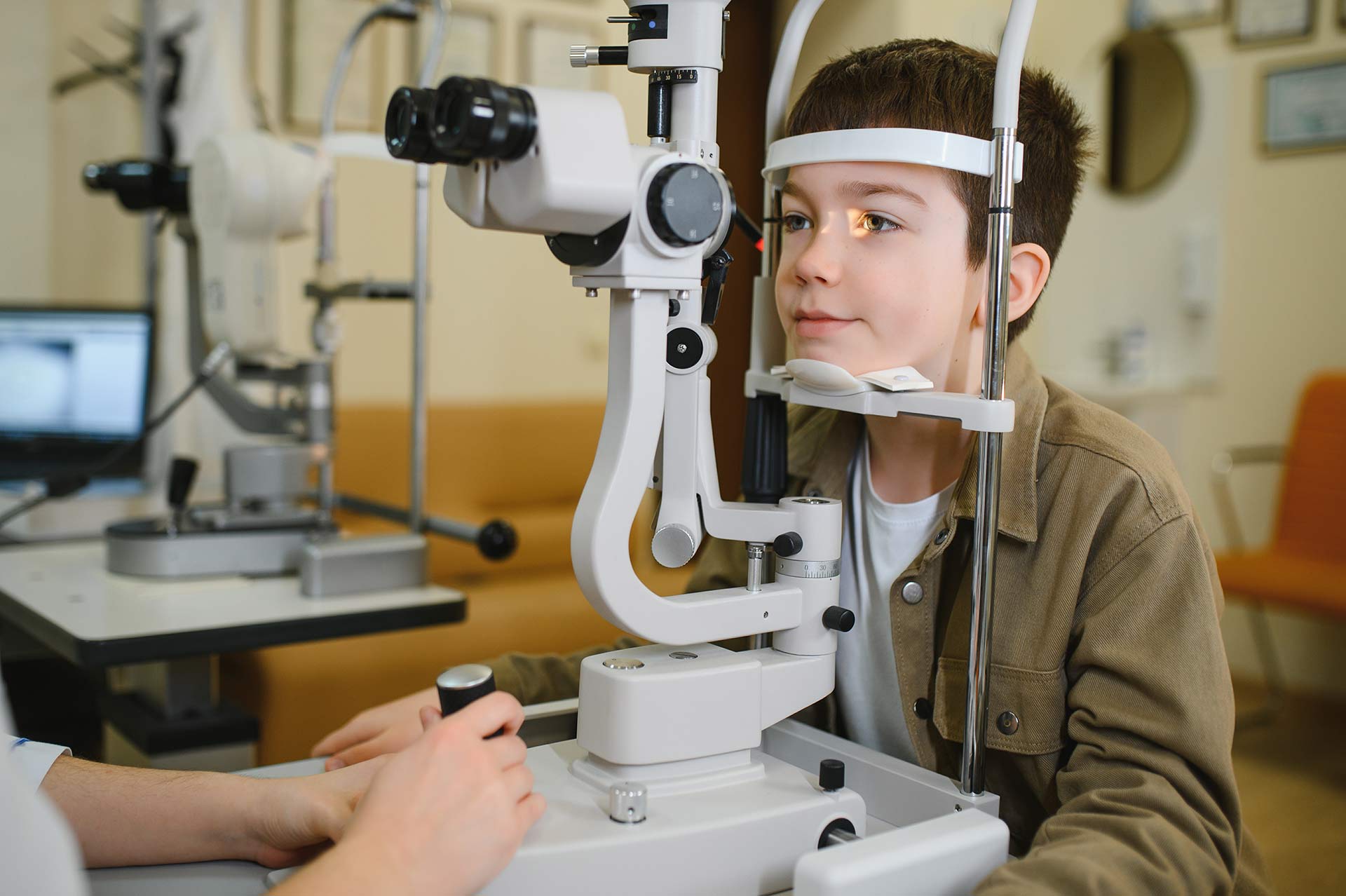
Myopia in Children: Why Short-Sightedness Is Increasing
Over the past two decades, eye care professionals around the world have noticed a significant rise in myopia in children. Myopia, also known as short-sightedness, occurs when distant objects appear blurry while close objects remain clear.
This growing trend is being observed in communities across the Northern Rivers region, including Alstonville, Byron Bay, Ballina, Lennox Head, Lismore, Evans Head, Casino and Kyogle.
Parents often first notice that their child struggles to see the classroom whiteboard, squints when looking at distant objects, or sits closer to the television. Understanding why myopia is increasing can help families support healthier vision development.
What Is Myopia?
Myopia occurs when the eye grows slightly longer than normal from front to back. When this happens, light entering the eye focuses in front of the retina instead of directly on it.
This results in blurred distance vision.
Children with myopia may experience:
-
Difficulty seeing the board at school
-
Squinting to see distant objects
-
Sitting very close to screens or books
-
Complaints of blurry distance vision
-
Frequent headaches after visual tasks
Myopia can begin during early childhood and often progresses through the teenage years.
Why Myopia in Children Is Increasing
Researchers believe several lifestyle changes are contributing to the increase in childhood myopia.
Increased Screen Time
Children today spend significantly more time using digital devices than previous generations. Phones, tablets, computers and gaming systems require extended close-up focusing and Myopia in children is a problem.
When the eyes spend too much time focusing at short distances, the eye may adapt by elongating, increasing the likelihood of myopia.
This pattern is seen in families throughout Ballina, Lismore and Byron Bay, where digital learning and screen entertainment are now common parts of daily life.
Less Outdoor Activity
Outdoor play appears to play an important role in healthy eye development. Natural light and the need to focus on distant objects help balance visual growth.
Children who spend less time outdoors may have a higher risk of developing myopia.
Encouraging outdoor play in areas like Lennox Head, Evans Head and Kyogle, where natural environments are abundant, can support healthy visual development.
Intensive Near Work
Reading, writing, homework and screen use all require sustained near vision. When children spend long hours focusing closely without breaks, visual fatigue can occur causing Myopia in children.
Over time, this may contribute to the progression of myopia.
Signs of Myopia Parents Should Watch For
Early detection of myopia in children is important because it allows parents and eye care professionals to manage the condition more effectively.
Some signs to watch for include:
-
Squinting to see distant objects
-
Moving closer to the television
-
Sitting very close to digital screens
-
Complaining about blurred distance vision
-
Holding books very close to the face
-
Frequent headaches after reading or screen use
-
Difficulty seeing the board at school
Children living across Alstonville, Casino and surrounding Northern Rivers communities may not always realise their vision is blurry. Many assume what they see is normal.
Routine eye examinations help identify these changes early.
Why Early Detection Matters
When myopia develops in childhood, it often progresses as the eye continues to grow. Higher levels of myopia later in life may increase the risk of certain eye conditions, including:
-
Retinal detachment
-
Glaucoma
-
Macular degeneration
-
Myopic retinal changes
Monitoring myopia early allows eye care professionals to guide families toward strategies that may help slow progression.
Families across Ballina, Byron Bay, Lismore and Lennox Head are increasingly aware of the importance of early eye care.
Lifestyle Habits That Support Healthy Vision
Although genetics can play a role in myopia development, lifestyle habits also have a strong influence on how children’s eyes grow.
Parents can support healthy vision development through several simple habits.
Encourage Outdoor Play
Spending time outside exposes the eyes to natural light and encourages distance viewing. Research suggests that children who spend more time outdoors may have a lower risk of developing myopia.
Activities like sports, cycling and outdoor exploration around Evans Head, Kyogle and Byron Bay can support visual health.
Take Regular Breaks from Screens
Children should take regular breaks when reading or using digital devices. The commonly recommended 20-20-20 rule can help:
Every 20 minutes, look at something 20 feet away for at least 20 seconds.
This allows the focusing system in the eyes to relax.
Maintain Good Reading Distance
Books, tablets and screens should be held at a comfortable distance from the eyes. Holding devices too close increases visual strain.
School Vision Demands Are Increasing
Modern classrooms require children to shift focus frequently between near and far distances. Students may look from notebooks to whiteboards, tablets to classroom displays.
These constant visual adjustments place significant demand on the visual system.
Children in schools throughout Alstonville, Ballina, Lismore and Casino often rely heavily on digital learning tools, making vision care more important than ever.
Supporting Children’s Visual Confidence
Clear vision is essential for learning, coordination and confidence. When children struggle to see clearly, they may experience frustration in the classroom or during activities that require visual accuracy.
Parents sometimes notice improvements in school engagement once visual issues are addressed.
Children who can see clearly often demonstrate:
-
Greater reading confidence
-
Improved classroom participation
-
Better concentration
-
Increased enjoyment of learning activities
These changes can have a positive impact on both academic performance and self-confidence.
The Importance of Regular Eye Examinations
Routine eye examinations are one of the most effective ways to monitor myopia in children.
Children’s eyes change rapidly during development. Regular checks ensure that any changes in vision are identified early.
Eye care professionals can also provide guidance on lifestyle habits that support healthy eye growth.
Families across Alstonville, Byron Bay, Ballina, Lennox Head, Lismore, Evans Head, Casino and Kyogle are encouraged to prioritise regular vision checks as part of their child’s overall health care.
Supporting Healthy Vision for the Future
The increase in myopia in children is a global trend, but awareness and early care can make a meaningful difference.
Encouraging outdoor play, managing screen time and scheduling regular eye examinations all contribute to healthier vision development.
By supporting these habits, families can help children grow with clear, comfortable vision and the confidence to explore the world around them.
Healthy vision supports learning, independence and everyday life. Protecting children’s eyesight today helps build a stronger foundation for their future.
Contact Lamas & Brown Optometrists and discover a world of difference!